Emergency Fund support for human rights defenders – 2025 in numbers
Defending human rights is an act of courage, and in many parts of the world it comes at great personal risk. When a human rights defender faces threats, intimidation, or sudden danger, Civil Rights Defenders’ Emergency Fund steps in to provide rapid, flexible, and life-saving support. In those critical moments, timely assistance is crucial for human rights defenders to continue their work and protect the rights of others.
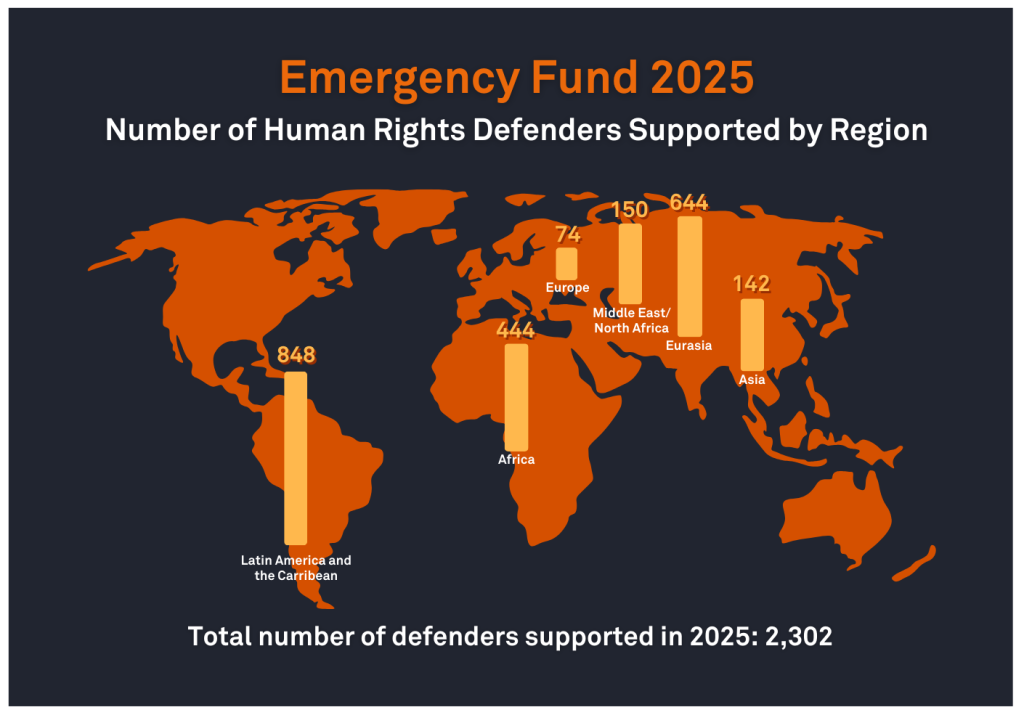
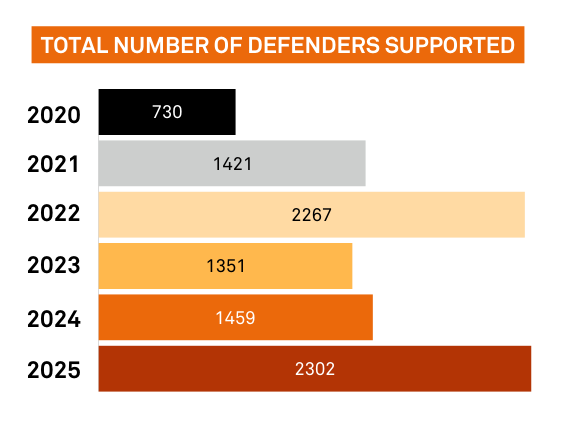
In 2025, the Emergency Fund supported 2,302 human rights defenders and their family members in 29 countries. This represents a 57 percent increase compared with 2024. Despite continuously reduced funding, this is a clear reminder of how vital the Emergency Fund is for human rights defenders and civil society working in some of the world’s most repressive environments.
Rising demand, shrinking resources
Across the globe, threats against human rights defenders have become more severe and more frequent. Democratic backsliding, armed conflicts, and political repression expose defenders to harassment, arbitrary detention, digital surveillance, and violence.
Requests for emergency assistance increased significantly throughout the year. Each week brought urgent appeals requiring difficult prioritisation decisions. Despite limited resources, our flexible and rapid response allowed us to reach more defenders than ever before and adapt to fast-moving situations. It is important to acknowledge that behind each request was a person whose commitment to human rights remained unshaken, even under immense pressure. However, responding to those appeals depends on available resources. While the need for protection continues to grow, available funding does not.
“Democracy and human rights rely on the courage of those who stand up to defend them. In places where civic space is shrinking, timely and flexible protection can mean the difference between being silenced and continuing the fight. Through the Emergency Fund, we help ensure that human rights defenders are safe enough to keep going – in their work, in their communities, and in their efforts to advance human rights.”
— Ana Maria Mendoza, Emergency Fund Programme Lead at Civil Rights Defenders

A lifeline in the face of danger
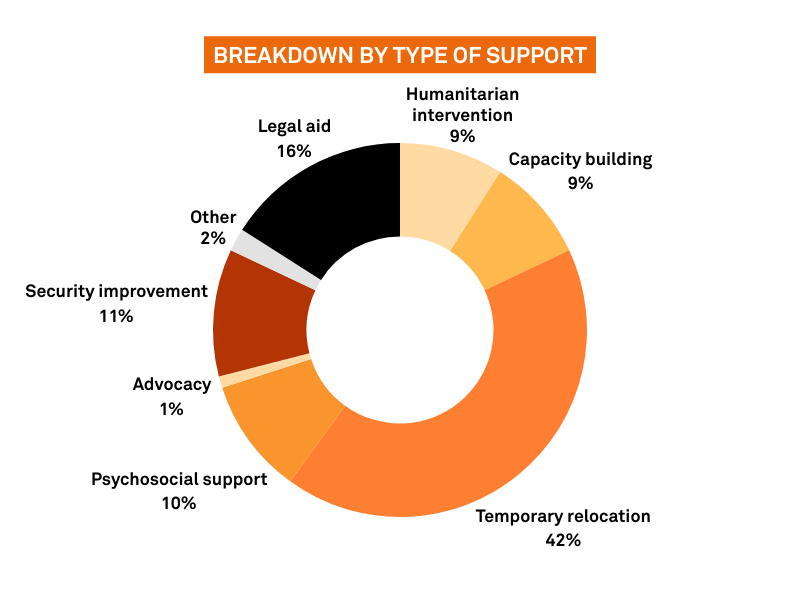
In 2025, temporary relocation remained the most requested and impactful form of support (42%). For many defenders, escaping immediate danger is the first step towards increasing their safety and enabling them to continue their work from a more secure environment.
Alongside relocation, the Emergency Fund provided targeted support across a range of protection needs. This included access to legal aid (16%), security improvements (11%), psychosocial support (10%), capacity building initiatives (9%), and humanitarian assistance (9%), as well as other types of support (3%).
Each intervention, whether large or small, was tailored to the specific risks defenders faced, often combining multiple forms of support to address overlapping threats. Beyond immediate protection, the goal is always the same: to restore stability, reinforce resilience, and enable defenders to keep going.
Responding to crises worldwide
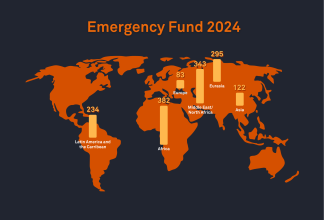
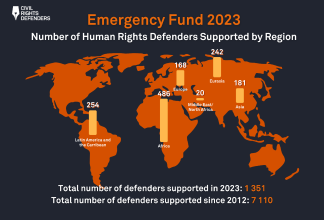
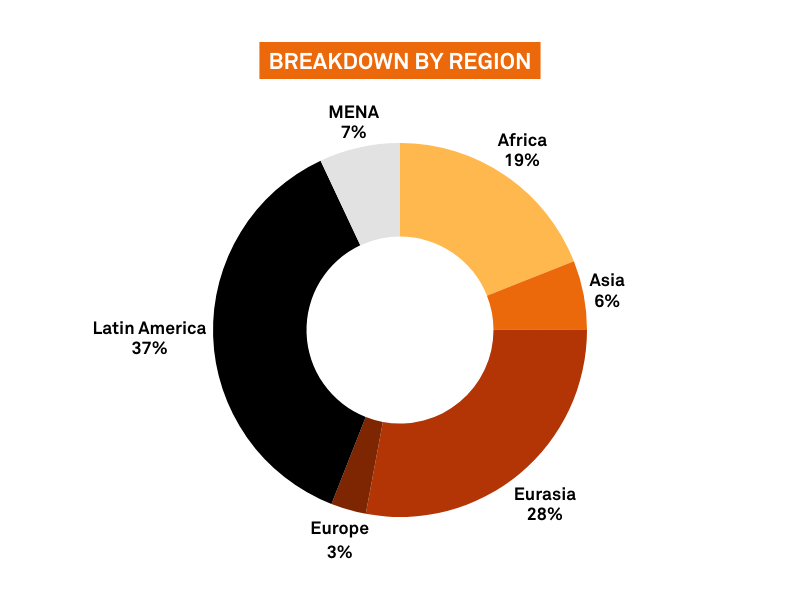
Our global mandate allows us to support defenders across multiple regions, each shaped by distinct but intensifying forms of repression. In 2025, we provided support through 135 grants across six regions. While some regions saw a decline compared to 2024, others, particularly Eurasia, Latin America and the Caribbean, experienced an increase. This was driven by sustained crackdowns on civic space, growing criminalisation of dissent, and deepening political repression.
Although the methods of repression vary across regions, the underlying patterns are strikingly similar. Governments increasingly rely on restrictive legislation, digital surveillance, legal harassment, and smear campaigns to silence independent voices, with women human rights defenders, LGBTI+ activists, and other marginalised groups often facing heightened risks.
In Africa, defenders operated in contexts marked by instability and shrinking civic space, with LGBTI+ activists facing intensified persecution, criminalisation, and social exclusion. In Asia, ongoing repression and surveillance continued to limit the work of activists defending democracy and seeking accountability. Europe saw persistent legal and political pressure on defenders, particularly those working on the rule of law and minority rights. In the Middle East, conflict and regional instability further heightened risks for those documenting violations in war-affected contexts.
These dynamics reinforce the continued need for rapid and flexible protection mechanisms that can respond as risks escalate, while recognising the gendered and intersectional nature of threats.
Who we help
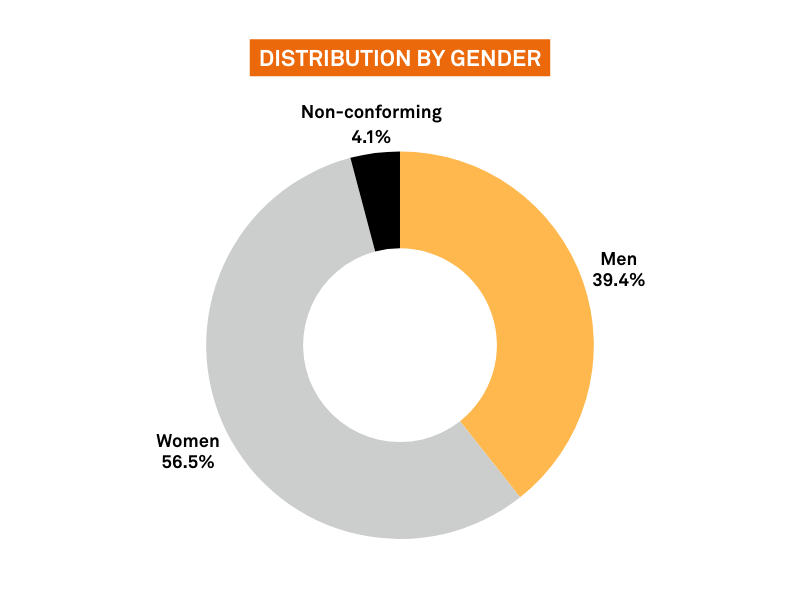
The Emergency Fund supports any human rights defender who is at risk because of the work they do, regardless of where they are or which rights they defend.
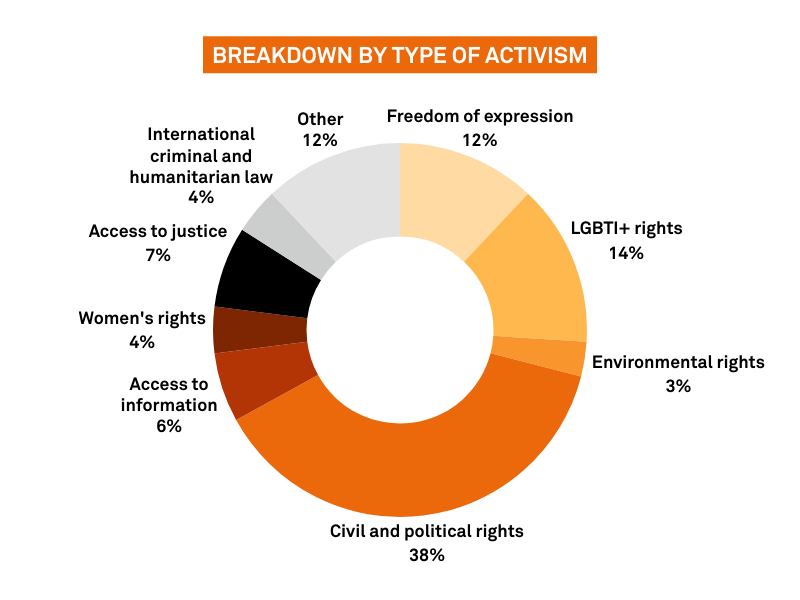
Whether advocating for LGBTI+ rights, freedom of expression, environmental justice, or the rights of marginalised communities, defenders should know that they are not alone. Human rights defenders can apply individually or as organisations. We also acknowledge the differentiated threats and violence that human rights defenders face based on gender and the intersection of different aspects of their identities, and we work to make funds accessible and inclusive for the most vulnerable groups.
How we support
When human rights defenders face threats because of their work, the Emergency Fund provides flexible, needs-based support tailored to their specific risks. This can include security improvements, capacity building, legal aid, psychosocial support, temporary relocation, or humanitarian assistance for families of imprisoned defenders. Often, we provide multiple forms of assistance as part of a combined intervention. Our flexible approach enables us to respond quickly to urgent needs, longer-term threats, and the wider impact of global geopolitical shifts.
At the core of our approach is resilience: safeguarding wellbeing, strengthening security, and enabling defenders to continue their vital work.
Help us support human rights defenders
We are proud of the many human rights defenders we were able to stand beside this year. But the growing number of urgent requests makes one thing clear: the need is greater than ever.
With more flexible and sustainable funding, we can act faster, reach more defenders in danger, and help ensure that the fight for human rights continues, even in the most challenging circumstances.
Donate to the Emergency Fund today and become that source of security for a human rights defender.
Help us support human rights defenders