New Study Highlights Pathways to Justice for Victims of International Crimes
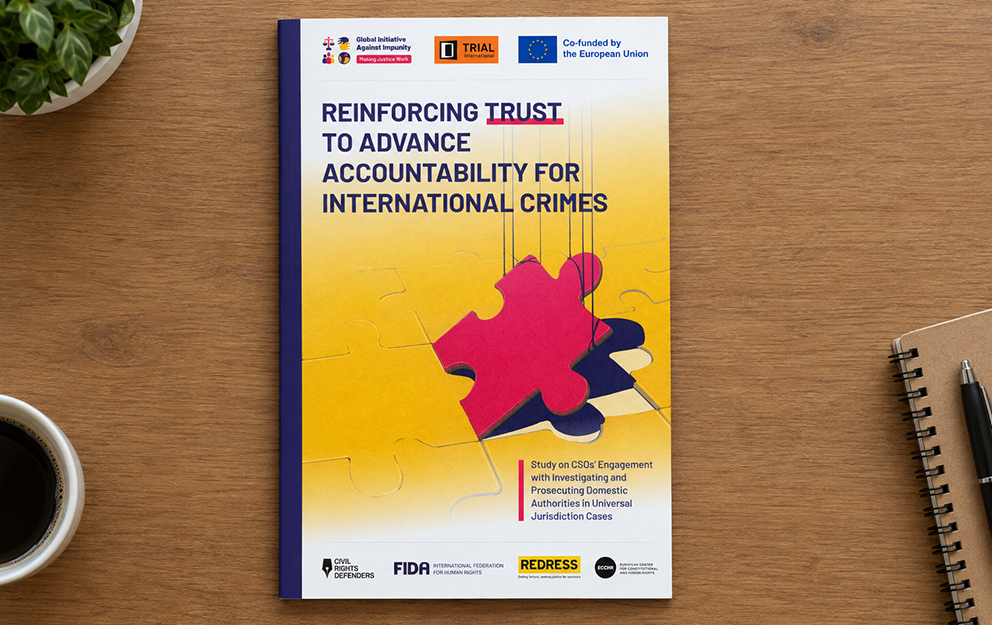
Effective accountability for international crimes often depends on strong cooperation between civil society organisations and national authorities. A new report published today explores how that cooperation can be strengthened to better support investigations, prosecutions and access to justice for victims and survivors.
Building trust between civil society organisations and prosecuting authorities is essential for advancing accountability for war crimes, crimes against humanity and other serious human rights violations.
A new report published today within the Global Initiative Against Impunity (GIAI) examines how cooperation between civil society organisations and domestic authorities can be strengthened to better support investigations and prosecutions of international crimes. The study identifies both successful practices and persistent challenges, and offers practical recommendations to improve collaboration in the pursuit of justice.
Drawing on 74 interviews with more than 100 participants across 12 jurisdictions, the report brings together the experiences of civil society organisations, legal practitioners, investigators and prosecutors working on accountability for international crimes.
Among its findings, the report highlights the importance of trust, transparency, long-term engagement and adequate support for victims and witnesses. It also presents recommendations aimed at strengthening dialogue, sharing expertise and improving legal and institutional frameworks.
The report was developed by TRIAL International together with Civil Rights Defenders, ECCHR, FIDH and REDRESS, and is intended as a resource for practitioners working to advance accountability for international crimes.
Read the report: 2026_Reinforcing Trust to Advance Accountability for International Crimes.