Internships opening doors for young women in Ethiopia

A year ago, Marta Negatu from Ethiopia was about to graduate from university with a degree in Psychiatry and Business Management. Looking for jobs, she stumbled across an internship opportunity at a local NGO supported by Civil Rights Defenders. Marta had volunteered for several charities as a student, so she decided to apply. It was a risk: human rights defenders in Ethiopia face real security threats, and the position was only temporary.
The weeks passed by. Marta went for several interviews at various private and international companies. When the NGO – Development for All (DFA) – finally got back to her, she’d already been offered another job. That role came with excellent benefits and the prospect of career growth, whereas DFA could only offer a six-month contract and a humble transport allowance.
“I’m so glad I took the risk and accepted that internship!”
It was a difficult call. In the end, Marta decided to take the internship. “It felt like a unique opportunity I’d probably never get again,” she recalls. The decision changed the course of Marta’s career: she is now the Executive Director at DFA and very happy in her role.
A challenging sector for women
Being a human rights defender in Ethiopia is not easy. The country’s volatile political situation has led to shrinking civic space. Human rights defenders face real security threats on a daily basis. Things are particularly hard for young women: verbal and sexual harassment are common. At some organisations, work requires women human rights defenders to travel to hard-to-reach areas.
The support she received at DFA motivated Marta to continue working with human rights despite these challenges. She credits her growth to the mentorship she received at DFA. “The organisation provided a space to keep growing. Every day, I learnt something new from my mentor Jebessa. The internship really changed my perspective on the civil society sector,” Marta says.

Supporting the next generation
Ethiopia’s civil society sector is male-dominated, with limited opportunities for women. When civil society organisations do employ women, it’s usually only in lower positions. Often, representation is merely symbolic. Things are particularly tough for young women: without years of experience, they often lack the lengthy CV and connections to get a foot in the door.
That is why Civil Rights Defenders created an internship programme in Ethiopia to help young women embark on a career in civil society.
Civil Rights Defenders provides the host organisation with guidance and resources, while the organisation gets to work with a valuable young professional with plenty of enthusiasm and skills. The interns receive a modest allowance as they learn about the civic space and gain hands-on experience.
A ripple effect in the sector
Since 2019, the programme has resulted in more than 15 internships at 13 different host organisations. Many of the young interns, like Marta, have stayed in the sector, using the internship as a stepping stone for their future.
When Marta’s internship ended, DFA hired her as a project officer and later promoted her to Head of Programmes. During her time at the organisation, Marta not only worked on various projects but also submitted her first project proposal. It became one of just 20 projects to be selected from among 700 applications, a clear testament to the impact of investing in young women.
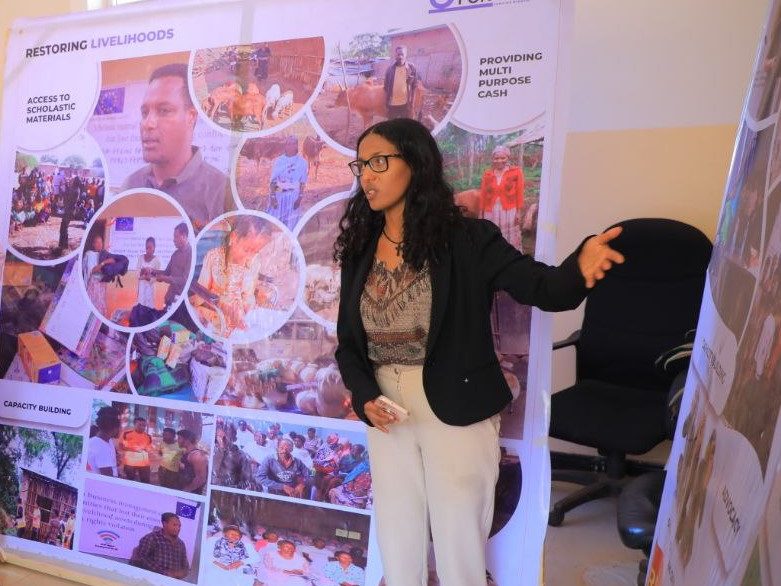
DFA’s positive experience with Marta encouraged the organisation to keep offering internships. Today, four other young women who started as interns work full-time at the organisation.
Jebessa Senbeta, former Director of DFA, says the programme has been invaluable to the organisation: “Nurturing these promising talents has brought fresh perspectives and high motivation to our teams. We’ve seen clear benefits – from strengthened project delivery to the long-term potential of developing future professionals like Marta.”
“Give it your all”
Marta’s advice for other young women considering a Civil Rights Defenders-funded internship is to give the opportunity their all and openly discuss their expectations and needs. There will be challenges, she warns, but interns shouldn’t shy away from addressing these.
“Whether it’s one or six months, try to get the most out of the internship. Use every opportunity to show your potential.”
Similarly, Marta urges host organisations to invest to the fullest in the young women they hire, like DFA did for her.