Ugandan Civil Society Engages EU on Digital Repression and Civic Space
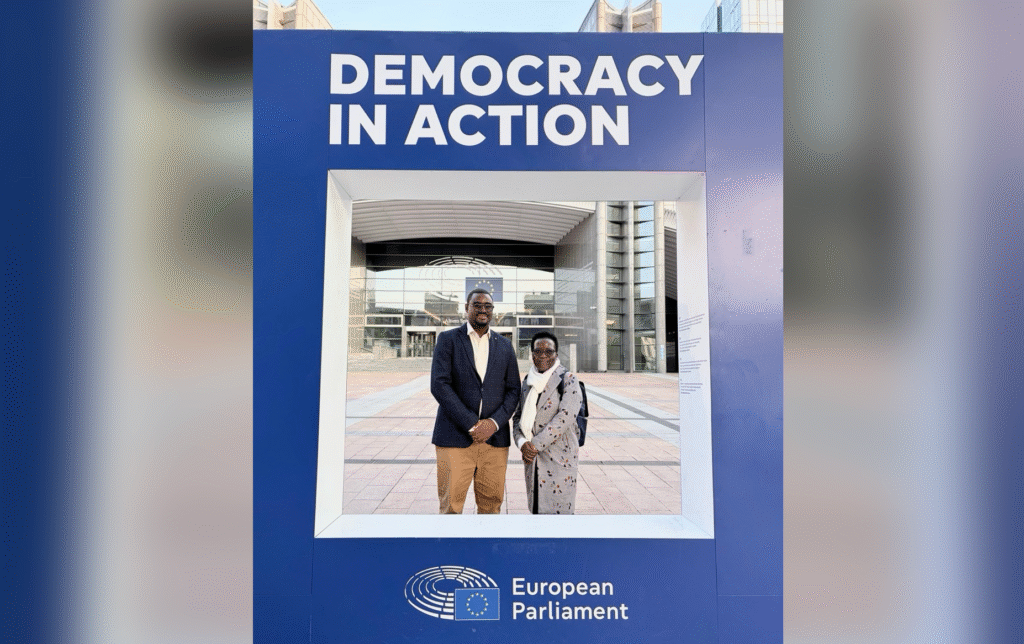
Last month, Civil Rights Defenders organised an EU advocacy mission to Brussels for human rights defenders from Africa and Latin America. Bringing local civil society representatives face-to-face with EU decision-makers is a key part of our work to ensure that those directly affected by human rights violations can make their voices heard where decisions are made.
As part of the mission, two Ugandan civil society organisations met with EU institutions, Member States, and the European External Action Service (EEAS) to raise concerns about digital repression, technology-facilitated gender-based violence (TFGBV), arbitrary arrests, and the shrinking civic space in Uganda.
The meetings highlighted how surveillance technologies, restrictive legislation, and online harassment are increasingly being used to undermine civic participation and silence dissent. Participants drew particular attention to the growing use of TFGBV against women human rights defenders, journalists, and political leaders.
Throughout the mission, Ugandan partners led the discussions and set the advocacy priorities.
“We leave Brussels with a clearer understanding of how to engage the EU more effectively and with stronger relationships across its institutions. Most importantly, we ensured that the experiences of Ugandan human rights defenders were heard directly by policymakers, creating a foundation for sustained dialogue and stronger action on human rights in Uganda,” says one of the participants.
Participation in cooperation
The advocacy meetings were conducted as part of the Consortium to Promote Human Rights, Civic Freedoms and Media Development in Sub-Saharan Africa (CHARM), funded by the Swedish International Development Cooperation Agency (Sida).
“This engagement with EU institutions was more than an advocacy visit. It was an opportunity to bring the realities faced by Ugandan human rights defenders directly to policymakers, strengthen relationships, and lay the groundwork for more effective advocacy in the years ahead,” says one of the participants.